Saturday, May 30, 2020

Protesting America is in the Streets Again -- STAND PROUD, AMERICANS!!!!!

On Protest Movements & Conspiracy Theories, in 2-part Harmony. Common Time.


Part I – 21 November 2012
Part II – 28 November 2012
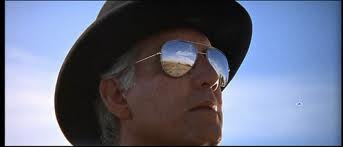
There's something happening here…
What it is ain't exactly clear.
            (Prelude - Verismo)

Paranoia. I am a philosopher with eyes in my head; and this head of mine is canted very deliberately in the direction of the world that surrounds me. Now for what it is worth, although I am not much given to conspiracy theories I still have to admit to being plagued by a rather significant degree of social distrust. Stephen Stills penned words for my Vietnam-era generation’s deep-rooted social malaise in the song For What it’s Worth -- “paranoia strikes deep”; and in my platitudinous book, it is hackneyed but nonetheless still true that “if it walks like a duck and quacks like a duck….” And, then, how can one contest the ultimate logic of the paranoid, to paraphrase Mel Gibson’s delicately-wound character from Conspiracy Theory—just because I am paranoid does not mean I am not being followed…?

This morning’s Reflection is not about the various theories of conspiracy surrounding the re-newed American President; these are presently holding court in the Internet Universe and each will run its course in due time according to its merit. Rather, I am interested in imagining, in a conspiratorial kind of way, what the world of men around me would begin to look like were I, like an author of some futuristic novel, to develop and implement a plan, or plot, or conspiracy to take over the world. This Reflection is inspired both by Richard Rubenstein’s The Cunning of History. Mass Death and the American Future, which my students read in the ethics classes, as well as by my own social paranoia.

The 20th century, born out of a 19th Century’s industrialized and economic vision of the world of men, has been described quite reasonably as a modern man's Book of the Dead. In this rather unique 1972 book Elliot calculates that the first 70 or so years of the 20th century oversaw 100+ million state-made dead, which means that both practically and metaphorically, the 20th century may go down in human history as the era that will compose the Death Symphony of the Individual. Our interest in this Reflection is the metaphorical death of the Individual as an idea, and all germane conspiracies tending toward that end.
            Now, philosophically speaking, the modern idea of the Individual was born along with René Descartes’ (1596-1650) Big Idea of the cogito-Individual—the Thinking Self. Of course the idea was not his alone; but it was his primarily.

Everybody look what's going down…
There's battle lines being drawn
Nobody's right if everybody's wrong
            (Intermezzo – adagio)

The History of the Individual as an Idea. From the bird’s eye, the view of the history of this idea looks a little like this: the Greece of antiquity oversaw a shift away from traditional mythological representations of the world, a world full of gods and other invisible critters, to an era dominated by simple men reasoning around and about the physical world that was in front of them, and confining their reasoning to the material edges of that world. The general thinking in this period in the history of philosophy was that it is possible to think about the physical world, and men in the world, without having to explain things in terms of Invisibles… so gods became, by and large, sidelined as explanatory devices. Blandly concluded, Plato the dualist and Aristotle the monist would become central figures in the history of this philosophical shift, each representing a distinct point of view. Plato thought that there were two dimensions of reality, physical and non-physical (but not really gods of any meaningful sort), and Aristotle that there was only one essentially knowable dimension of reality, the physical.
            Now even though Aristotle (384 BC – 322 BC) will define the human animal as a featherless biped that reasons, i.e., biology that is of the thinking sort, philosophically speaking the Individual as an idea is still not in fact fully birthed in the era of the ancient Greek thinkers (although I seem to recall that F. W. Nietzsche interpreted Socrates as the first individual… it would seem, after all, that FWN did not always get it right!).
            With the advent of the Christian period, which would naturally be more receptive to a Platonism that admits of Invisibles than to an Aristotelianism that finds more persuasive the idea that the world is entirely composed in terms of materiality, the focus of thinking will once again shift away from the substantial world of the earliest philosophers and back to an earlier, mythological way of defining the world in terms of Invisibles. In the Christian period, which will continue all the way to the modern period (where we meet, among others, Descartes), men will not be conceived individually or as individuals in any meaningful fashion, but will be clumped together into a “people”; “all God’s Creatures” will be fused into an indistinct collectivized mass called the Invisible Church, with all the attendant Christian values, vices, and virtues.
            Now all this listing of events hither and yon is neither here nor there, but is just a brief, bird’s eye view refresher in the history of philosophical ideas, which brings us right back around to why Descartes’ idea of the cogito-Individual is a Big Idea. With this idea Descartes in fact challenges the Christian collectivist or fusionist definition of man—the idea of the Church, both material and spiritual, which constitutes the bedrock of Christian belief. For the thinkers of his day Descartes confirmed philosophically Aristotle’s original idea of Man as “biology that reasons,” by persuasively affirming that in its essence the individual is a “thinking thing,” which is what cogito means; and, voilà, an idea is born, and Descartes is obliged to flee très-catholique France for the more “livable” atmosphere of Amsterdam.
            Now, this idea of the cogito-Individual will split off into many historico-philosophical streams.
1) One stream will become the foundation of Kantian philosophy, with obvious repercussions on German thinking as a whole all the way up to Nietzsche, and will go on to be the paradigm structure of the psychological theories of Sigmund Freud in particular.
2) Another stream will go on to inspire the philosophes of the English and French Enlightenments to challenge formally, i.e., philosophically, the collectivizing dogma of the Christian Church, and would ultimately result in the idea that all things pertaining to the church should be separated from anything pertaining to the State, which in turn gave rise to a very modern State value that we call secularism, under whose aegis both the Americans and the French will wrap their young democracies.
3) A third stream of the idea of the cogito-Individual will be that which wetted the thirst of John Locke, who will provide the philosophical fuel for the fire that will ultimately cause the historical meltdown of the idea of the divine rights of kings; from this will spring up in turn a new idea, which is the validation of the idea of the social contract. This idea-stream will then dampen the boots of Thomas Jefferson, who decides that it will fit very nicely as the philosophical cornerstone for the Nation that the new-world philosophes were trying to articulate philosophically and to create practically and institutionally. When “The People” as a body of valuable Individuals is created as an idea, and then set in opposition to the idea of a “king,” this also automatically allows the logical possibility for the creation of individual rights for men.
4) And finally, this idea of the cogito-Individual will also be the foundation that will support the rise of the masses in the 19th century, where each individual has rights, and each one counts in the real function of State, both as working contributor in the industrial production of the State’s economy, and as social and political participant though universal suffrage “in the way the State should go”.

In the history of western philosophy the period surrounding and following Descartes is aptly called the Age of Reason. Along with generating some amazingly Big Philosophical Thoughts, like the cogito-Individual, there was at this point another idea-pattern that strode upon the center-stage of western history with far-reaching consequences – for with the dissolution of the monarchy-idea and the emergence of the idea of The People, it was almost an organic necessity that men would work out an alternative pattern for social structure—the idea of Nation. Will and Ariel Durant remind us that a simple exchange took place in western social thought in this period of our history—as the cogito-Individual took form philosophically, it also had to rethink itself politically: “In this period the basic developments were the rise of murderous nationalisms and the decline of murderous theologies.”  

You step out of line,
the men come and take you away…  
            (Accelerando)

As I was saying before the historian of ideas in me cried out for context: born of a 19th Century’s revolution in industry and economy, the 20th century will orchestrate the slow and very deliberate decline of this very particular republican and liberal idea of the Individual. This is the philosophical mooring of Rubenstein’s vision, and of my futuristic fantasy. The exercise for us, then, is to think about the Nazi period in Germany, and then to take the deceptively simple mental step of transposing some of the more disastrous elements of the German State of the Nazi era onto today’s American State (Rubenstein specifically transposes onto the America of the Nixon Administration, but my interest is more general in scope).
            In the broadest strokes, Rubenstein’s argument is that the business (corporate) and industrial philosophy of the Nazi state was framed around the idea that man was an exploitable cog within the machinery of the State, hence subservient to the idea and purpose of State, in all respects. With this idea as philosophical and socio-political premise, a predictable starting point for assuring the economic stability of the Nazi State, was for the State and Industry to seek out or to create a renewable and disposable source of minimally paid, or indeed unpaid labor to ensure continued industrial production.
            To create such a population, in 1935 Germany passed the Nuremburg Laws, which stripped Jews of German citizenship and redefined them as wards or “subjects” of the German State; and by redefining and thereby creating a specific, legally marginalized, and dependent population within the State, Germany was easily able to transition from caretaker State to slaveholder State, which (according to the Internet-God) worked to the advantage of companies such as Thyssen, Krupp, IG Farben, Fordwerke (the German subsidiary of the Ford Motor Company) and Adam Opel AG (a subsidiary of General Motors). Of course, an early 19th century corporation that might look an awful lot like IBM would be needed to do all the bookkeeping and accounting for the captains of these Industries.
            The process begins by legally redefining and marginalizing the desired population, then interning them, first in ghettos then in internment or labor camps (such as Auschwitz); this provided German Industry & Friends with an almost infinitely renewable source of free labor to be redefined progressively as the particular labor pool became exhausted (i.e., the Jews, the Gypsies, the Communists, the Poles, the homosexuals, the blacks, etc.). So the utility of the state-cog/slave laborer to the German State of the Nazi era was defined in terms of Industry and Production, and this cog/laborer was either immediately disposed of (annihilated), or disposed of in the short term when its work capacity began to diminish below a certain horizon.
            As a business philosophy or strategy, the advantages to German Industry of this process of labor pool creation during the war, were obvious.  Exhausting this type of labor pool does not drain the economic resources of the State, because the overhead is minimal and the labor is free, thus guaranteeing a bottom-line net profit to whoever owns the slave.

Friday, May 1, 2020

Waiting


~by David Aiken~

From confinement.fr, 2020

DA_1972
A whole lot of our lives is spent just hanging around, waiting. Waiting, though, is a very singular occupation, and deeply deceptive. For behind the calm appearance of inaction there is an endless bustle of unseen, and certainly unobserved, action actually occurring.

There are nights that I still dream about diving… springboard diving—flying through the air with the greatest of ease, and all that jazz. I have had these dreams regularly for most of my adult life, and after all these years I still really do not know what to think about them.
In these dreams I “feel” myself to be in an emotionally neutral state—there is neither fear nor anticipation nor intimidation, although Lord knows that there were some dives I hated doing because they scared me to death; other dives I hated simply because I did not like diving from anything higher than a 1-meter diving board. But neither is there exhilaration in these dreams—although I can still clearly recall some rare moments of body-soaring splendor associated with deliberately falling through the air and entering taut into the waiting arms of receptive, womb-like blue waters.
In these dreams my body is both subject and object. It seems to be a distinctly different entity from my watching and “feeling” mind-self; and yet these two, mind and body, are co-happening in the same exact space using precisely the same tools. This is intuitive Cartesianism at its very best. My diving dreams involve me watching my body falling through unoccupied space as a detached outside observer would; but the observer is actually also watching and experiencing the action, and anticipating the various movements and gestures, unemotionally, from inside the plunging body.
These dream states do not even seem to involve my body-in-motion as a process of an object succumbing to gravity. But rather, like Zeno’s arrow, my body is in a series of quasi stop-motion images where I observe myself at different stations or static moments in the stop-action motion picture of the dive. Where the true Outsider sees the split-second fluidity of action, the inside observer, poised in space, feels an eternity of inaction—of holding fast, of waiting. A fine phenomenological moment for a dream, I suppose. But our reflection here is interested in the question of the meaning of such dreams.

I was a fine-enough diver for the day: high school varsity athlete and letter-man; MVP in my senior year; district high-point scorer; athletic scholarship to dive for a large state university; Olympic coaches—tout le biz, quoi. However, I knew even then that I was never going to be a truly excellent diver, because I detested competition—even in those days of my budding, I was the hippy philosopher… I was in the game for the beauty of the experience rather than for the competitive win. It was obvious to me early on that I was never going to be the great competitor, simply because I had started diving too late. As the high school hipster version of myself, I was going through some of the local diving camps, which were being flooded by 10-year old kids who were already doing more complicated dives (i.e., with higher degrees of difficulty) than I ever would do, and with much greater technical proficiency.
But I clearly excelled in at least one area: the undisputed consensus of anyone who has watched me dive was that in the air I was “truly beautiful to behold,” as Frank-N-Furter says about his newborn monster, Rocky. I was graceful; balletic; strong; …and pretty. There was also the wayward opinion that I had “sexy ankles” when pointed. So, I was a young man who, although he had some natural grace and gymnastic talent to recommend him, was always going to be in the wrong competitive game simply because he started the sport too late.

One interesting aspect of my dreams, is that they take me by the hand and lead me back into a reconstruction of body-memories and sensorial states; and this leaves me with a pleasant feeling when I wake up remembering. But this observation takes me no further along my path of trying to assess what these dreams might signify. I suppose it could simply be enough that I have some pleasure in just having of these dreams; but it seems to me there must be some additional meaning that my slumbering intelligence is trying to sort out through these body memories, which are becoming more and more remote from my waking reality with each passing day.

In the morning after having one of these dreams, I was telling my bride all about it, and she immediately looked up dreams at an online dream dictionary, here, and discovered about springboard diving dreams the following meanings:
·      To dream that you are diving into clear water indicates that you have overcome your obstacles and setbacks. You have a new sense of confidence. Things are looking up. Alternatively, the dream indicates that you are trying to get to the bottom of a current situation or the root of your problems or feelings. It may also refer exploration of your subconscious. 
·      To dream that you are diving into muddy water suggests that you are feeling anxious about how you have handled certain issues in your waking life.  
·      To see others diving in your dream represents psychological and emotional balance.
·      To see animals diving in your dream suggest that are exploring your instinctual and sexual urges which have been previously suppressed into your subconscious.

However, as none of these seem to be relevant interpretations or even interesting explanations of my diving dreams (animals diving?), we can blithely pass on, secure in remembering that, per Jung, ultimately only the dreamer can know the “truth” about his dream.

A second interpretative possibility for my dreams under the rubric, Diving Board (dreams):
·      To see or stand on a diving board in your dream indicates that you need to think things through carefully and thoroughly before you take the plunge. The dream may signal a new phase in your life. Consider the height of the diving board. The higher the diving board, the more significant and more difficult it is to take the next step and make the plunge.

This second possible interpretation proved a little more insightful, because I had this particular dream the night before my first class in the new academic semester. But, I still have to admit that these cheesola dream interpretation Internet sites are not terribly insightful, even if, on occasion, their nuclear bomb approach to dreams may hit the platitudinous interpretative peripheries on a possible target of meanings.

Sometimes, most of the time in fact, my diving dreams are about the specific mechanics of a particular dive. Perhaps my favorite dive, and the one that occupies almost all my recurrent diving dreams, was the half gainer, which is to say, the reverse dive in the layout position. You leave the board on a forward approach, reach up and back, push your chest up into the ceiling, and let the dive “happen” until you extend for entry into the water—stretching from the tips of the pointed toes all the way to the joined fists over the head that try to reach down into the center of the earth. Not a high-degree of difficulty dive, yet difficult to make look pretty.
Vitruvius_left; Diskobolos_right
In a pre-Olympic qualifying competition I once saw an excellent diver perform this dive with uncanny, quasi-military mechanical precision. I never saw such a thing – a true mechanical marvel, perfectly executed, worthy of a child of the mechanical revolution. And yet, although it was truly a perfect mechanical dive, it was not a beautiful dive by any definition. The dive was not lyrical, had no dancer’s soul to it… no imagination, no curve, no grace. It was simply a keenly executed, cog-type mechanism of a dive– a movement that was at home in the geometrical spaces of the world, like Leonardo’s Vitruvian Man, but which was not necessarily at ease, which is to say, beautiful, in those spaces. The Vitruvian Man, rather than Myron’s s-curved Diskobolos, was re-presented by that fine mechanical diver in that day’s competition.

Another beautiful dive is the back dive in the pike position, if the pike is done correctly, which is to say, with precision. However, the back dive in the layout position was another of my favorites because it is beautiful in the same way that the half-gainer is beautiful; after all, it is simply the half-gainer going in the other direction, starting backwards at the end of the board. The difference for me as the actor, on the other hand, was, to put it philosophically, entirely phenomenological. On the back dive my experience of time and of movement-through-space was much shorter than on the half gainer. Also, I could not “feel” myself in the same way – my visualization of myself laid-out and moving through framed space was somehow less visually complete.
Again from a phenomenological point of view, the front half-twist in the layout position was perhaps, from my insider’s visual point of view and feeling, most similar to the half-gainer layout, except that I had the additional and distinct “feeling” that I was dropping down into the world from the very top of space… I had the entire area of the pool in my field of vision, right down to the little point of water that was going to suck me into its vortex at entry. Then, at impact, there was that stretch right to the bottom of the world, and the hard point of the toes that would suck any splash down with it into the vortex, leaving only a telltale bubbling at the surface – the only indication that a moving body had recently passed through that tiny point in fluid space.

Sometimes, some of my diving dreams seem to focus on spatiality. During the half gainer, for instance, you leave the board going forward, stretch up to the ceiling and lift your face skyward, pushing your chest up and up and up. Then, just when the mechanic of the dive brings the body to the horizontal position, I have the distinct impression of seeing all of my body all the way to my toes, a view encompassing my entirety: extended arms, torso, legs, and pointed toes, and the water framing me as well… truly an interesting sensation. I remember once, during a competition with a local high school, that I was doing this half-gainer layout and getting some great altitude from the board, and I had the impression, because the ceiling on their pool was so low, that my chest was actually going to scrape against it. I hated diving at that pool – it “felt” a dingy yellow and made me feel claustrophobic in the air. Diving taught me more about my interior spatio-emotional states than any other activity in my life.

Then there were the entries. A diving entry is made beautiful by stretching to fit inside Zeno’s infinite line, which, he mused enigmatically, stretched out endlessly along points between, and separating forever, point A and point B. The fists are joined together above the head in order to punch a hole in the water for the body to pass through, and the toes are pointed so that it would almost cramp the calves. It is at this moment that the waiting becomes most intense… because there is really nothing else to do but fall; you just have to do it beautifully. Waiting in a dive is really an explosion of focused activity, although there will be periods within the 1.4 seconds you are in the air when you simply do not make any movement—nano-seconds of rock hard stillness. This time of inaction is necessary to create an appearance of ease, which hides the flurry of real muscular and mental activity.

I remember that my university had an enormous Olympic-quality swimming pool called Trees Hall. The main pool was 4-5 Olympic-sized pools “super-glued” side by side to make one giant pool; and the warm-up pool was just a simple, ordinary Olympic-sized pool in a smaller hall off to the side. The entire back hall of the main pool was glass, which meant that there were certain moments during a dive when, as if suspended in air, you could actually see yourself reflected in the glass. I remember two things from my time at Trees Hall. The first was that I was always cold. Perhaps it was the fact that one could see the snow or rain or simply the darkness through the glass, and then from inside the womb one got the feeling of the cold that was dominating the world on the outside. The other thing I remember is the 10-meter tower for platform diving.
I freely admit that I do not care for high places… never have and probably never will. Anything above the simple household ladder is profoundly uninteresting to me. However, at the end of the day one does have to steel one’s mind to the discipline at hand, whether painting ceilings on a ladder or dropping 10-meters from a tower into some water. So, I mounted the flights to the top of the tower – past the 5-meter platform, past the 7.5-meter platform, right up to the 10-meter platform. I remember standing on the edge of the platform staring off the tower, taking in the world that was unfolding itself to me at that height. Then I tried a simple swan dive in a layout position – very simple mechanically, with not a lot of thought and a great deal of body control. However, from the height of 10 meters, the time for the mechanism of this simple dive to happen is different from a departure at one or three meters. So came the over-rotation with Newtonian predictability… and an inappropriate physical impact upon arrival at destination.
“Sh#t may happen” as a matter of daily course, so goes the expression anyway, but eternity happens in just under 2 seconds… in about 1.43 seconds, to be more precise, which is the approximate amount of time one spends performing in the space between board and water. Think about it, which I did after the fact of my 10-meter fiasco, and for a very long time after that: the traveling speed of an object (my body) falling for just under 2 seconds + distance traveled (10 meters) + impact with a stationary surface upon arrival (H2O). Formulaically, this relationship would look something like this:
-10m = -1/2(9.8m/s2)t2
        t = 1.43s

Unfortunately, though, my particular experience on this occasion was not just about formulas. The most desirable arrival into the water from any dive normally occurs in the smallest possible space… in a straight up-and-down vertical alignment, whether standing up with toes pointed, or taking the impact through the fists, then the shoulders, then piking the body under water to continue pulling the surface water under with you in order to leave only bubbles on the surface. I, as an independently acting exception to either of these two more desirable solutions, had obviously opted for the over-rotated, full-body back splay from 10 meters. And, in what is perhaps the purest Archimedean experience of my life, in a Eureka moment, I grasped, I felt in all the spaces of my body, all of the world’s hidden forces—from inertia to velocity, from momentum to acceleration, and, finally, torque. After the water that was displaced by the entry of the falling object that was me, slammed through my entrejambe from behind with all of its reciprocating and displacing force, platform diving ceased to hold any interest for me.
It is a truism of diving, and certainly of many another activity of life, that the higher one climbs, the faster one drops. The problem is not the fall, which we can make interesting or not, pretty or not, but one does need to have some care with the stop at fall’s end.

When all is said and done, I am not sure that my diving dreams have any particular psychological significance in and of themselves, as gateway symbols to some other level of meaning about me or my progression through space and time. I think, rather, that these dreams constitute for me a sort of personal lament for a period of my life that is now relegated definitively to the past, a nostalgia for the beauty that, once, I used to know how to feel for myself, and to create for others, through my body. Those days and those gifts do not belong to my body-life now, but rather resurrect at night as dream-state memorials about the body that used to be mine.
My creations of beauty now must be of a different order, using the different gifts I am able to discern and awaken in myself. The springtime and summer days of my outside, my body-me, are revolved; now it is the season for gathering that which was sown and for bringing the harvest to shelter. It is time, and world enough, for my inside observer, the mind-me, to set about, as though there were no tomorrow, other Great Works that I might hope to accomplish.

In 1988, at the Olympic games in Seoul, the American diver, Greg Louganis, proved that he was indeed one of sport history’s more remarkable competitors. In the early rounds of the diving preliminaries Louganis injured himself by striking his head on the 3-meter springboard, requiring stitches… then he continued his performance to take the gold medal in the event. Louganis would win another gold medal in those games, in the 10-meter platform, and would take the Olympic Double gold in men's diving.
Here is a short video of almost perfect body motion—at times perfectly motionless, waiting, fully occupied, as it falls through space. This is a must view for any definition of human loveliness and integrity; and in the midst and flurry of all the action, just watch him WAIT for the moment when the dive would “happen.”

The lovely GL in a compilation from the 1988 Olympic diving finals, for your viewing pleasure: [http://www.youtube.com/watch?v=qP20D5vQsmM].


(Reprised from a Phrontisterion essay posted in February 2014)

Wednesday, April 1, 2020

Erotica – Thinking about Plato’s Symposium


~by David Aiken~

At times my email exchanges with former students go something like this:

Student: What do you think about witchcraft? Do you have any favorite books?

Teacher: Excuse me?!! Do I look like Wikipedia? You can't just continue to ask me questions without giving any of you...!
What about the plan to sail around the world? Who are your favorite storytellers?

Student: Okay okay... Forget the witchcraft talk... Let's talk about Love instead... 
What do you think of love? A goal of life? What's your take on soulmates?

Teacher: Good morning, kiddo! I'm afraid I don't do the soulmate thing... the idea first came out of Aristophanes, a comedic poet who fuses the souls of Robin Williams, George Carlin, and Eddie Murphy. So, the idea is not born of a reasoning at all, but rather of comedic inspiration! What would I say about Love? I suppose it would be something like: keep the sentimentality, but don't be blinded by it; and keep up, daily, the discipline of being actively considerate of the Other. Does that do anything for you?

Student: Ha, those words of wisdom inspired a smirk...

The most recent thread with this particular student begins with yet another in a running string of random questions, which happened, this time, to be ‘about’ —kind of — witchcraft. Of course, this rather scanty exchange is only representative; but I have to admit that many times these long-distance dialogical nuggets leave me bemused, other times stymied.
This particular interrogative snippet had the virtue of leaving me both bemused and stymied. Such is the alchemy of the philosophical life of the mind, however, that it also got me to think along the track of the Goals & Purposes of our life.

Georgia O'Keefe's Black Iris
It is a peculiarity about our world that continues to mystify us—which is to say that sometimes, just like with Georgia O’Keefe’s images, things are not entirely as they seem to be. There are going to be times, for example, when a flower is really not just simply a flower…
            Like Life itself attending to its vast variety of flowering activities, Thinking, as well, is fundamentally an erotic activity. And True Philosophy, which seeks to grasp in its noetic embrace whatever Insight and Clarity may be obtained from thinking about Man-in-the-world, is the highest of all erotic activities.
            In contrast, in those rare moments where we take the proverbial step back in order to take stock of our life and times, often enough it just seems that the life that looks back at us in the mirror of our mind’s eye, reflects a disturbing reality: that we are losing our way in the meandering Trivia Vitae of the day-to-day. And yet we start out so well!
When we are young… looking forward to changing the world—the world, and the actualization of our Life in that world, seems to us such a haven of promise and potential. Then at some point we seem to enter into a mist-bedecked bog of banalities, which encumber and indeed constitute the part-and-parcel reality of living day to day… cleaning toilets; washing dishes; doing laundry; getting achy, or sick, even just a little sneezy and coughy; cleaning up after the dog, or the children; folding clothes; eating; drinking; staring out the window; cleaning up in the garden; reading; watching movies; talking; not-talking; crying; feeling sad; feeling joy; feeling nothing in particular; remembering; wondering what could have been. These are the quotidian non-events that end up marking the path of our individual and rather trifling passage through the spaces of the world.

Yet, there is a wisdom tradition in Western philosophy that tries to show us a way out of the bog—how we may transcend the banality of simply-living. This is a wisdom that inspires us to craft our Life as an erotic composition; to transform ourselves into design art.
To be sure: we did not ask to be thrown into this Flood of Life. So, it is easy to believe, as we swim around looking for handholds to help keep our heads above water, that there is no particular purpose to our particular life. Yet, as a matter of fact, there are actually an infinite number of erotic purposes to our being in the world, each one of which takes the form of the Other. Including the Other that is our-self.

One of the truly inspired, and inspiring, erotic traditions of the West can be found in the philosophical framing of Plato’s dialogue, the Symposium, in which he dramatically stages for our viewing pleasure and edification an episode from the life of Socrates. Plato’s principal purpose in writing the Symposium, from this point of view, may well have been to represent to us that it is not the body-life, but the philosophical life of the individual, that is in fact the highest form of the truly erotic life.
On this argument, the basic ephemerality that characterizes sexual pleasure, is an obvious indication that such transient eroticism subsists on only the very lowest rungs of the ladder of eroticism. However, worlds beyond the fleeting physicality of bodily eroticism, there exists the enduring eroticism that awakens the soul’s or mind’s desire to be united with Understanding and Meaning—with Knowledge. This is the story of Socrates in the Symposium. Or, to put it as does James Arieti (1991, 99): “[E]ach speaker takes the topic of sex and etherealizes it until we get the quintessential transformation of sex into philosophy by Socrates.”

§ Madness in the tradition of Eros & the Daimon. Making sense of Diotima’s argument in Plato’s Symposium.
In the history of western philosophical ideas, bliss and madness have been most famously linked either with the erotic (e.g., Eros, in the Symposium), or with the demonic (e.g., the Daimon, in the Euthyphro). Tracing that extended history would be a work unto itself. The immediate interest of this reflection, however, is to appreciate the significance of Diotima’s curious argument recounted by Socrates and represented by Plato in the Symposium (setting ca. 416 b.c.e.). For it shall turn out that Diotima’s argument, as well as Plato’s mise en scène of Socrates’ retelling of that argument, shall ultimately constitute the cornerstone in the history of an idea whose dramatis personae shall be both Eros and the Daimon.
The general consensus of just about everyone who has an opinion on the topic, is that the subject of the Symposium concerns “Love.” This idea shall consequently go on to become the cornerstone in the history of the multi-faceted idea of Love in Western thought. Despite the popularity of this opinion, i.e., that the philosophical subject of the Symposium is really about Love and things erotic, this ‘read’ necessarily ignores or chooses to understate the clear textual-narrative import, perhaps not of the decontextualized Symposium qua keystone text in a constructed tradition of erotic literature, but certainly of Diotima’s speech, which textually constitutes the Symposium’s Socratic frontispiece.
Socrates is clearly the protagonist of this dramatic piece, which is more or less to be expected in Platonic literature. And, while Plato uses Diotima’s speech in an interesting twist, structurally, to represent Socrates’ own ‘position’, her speech, i.e., Socrates’ rendering and interpretation of her speech, is wholly devoted to theological, rather than to sexual, ideas, both in its framing and in its import.

The importance of the textual structure of the Symposium needs no longer to be established, following Allan Bloom’s decisive analysis in Love & Friendship. But, as usual with academics, the debate does not end there. Cobb (7-8), for instance, takes Arieti to task, citing his view on this point to be too “extreme.” Because, per Cobb: “[Arieti] argues that the dialogue is not a serious philosophical investigation of the nature of love. Rather it is a demonstration of the craft of theologizing. […] What the drama shows us […] is how the depicted nature of the god in each case bears a striking resemblance to the character of the speaker who is characterizing him. In other words, the Symposium is a dramatic depiction of the fact that when human beings discuss the gods, they tend to make the gods in their own images.”
While it seems that Cobb reads Arieti correctly, this theologizing interpretation of the Symposium is absolutely not extreme. In fact, it is right on the money. With Arieti, it is clear that we are not far removed from a type of skeptical thinking that defined the Pre-Socratic poet-philosopher-theologian Xenophanes, one of Plato’s philosophical predecessors, who was the first of the ancient philosophers to espouse a pragmatic skepticism concerning the gods:  Fragment 6. “But if cattle or lions had hands, so as to paint with their hands and produce works of art as men do, they would paint their gods and give them bodies in form like their own-horses like horses, cattle like cattle.”
This early form of philosophical skepticism vis-à-vis things divine, of course, will also pave the way for the later epistemological skepticism concerning things of the gods that will come to define Socrates’ famous claim to ignorance:  “The god who speaks through the oracle, he says, is truly wise, whereas human wisdom is worth little or nothing (Apology 23a).” This is not a Socratic one-off, either; because theological skepticism also entirely frames Socrates’ argument against young Euthyphro, who believes he is carrying out the will and purpose of the gods.

And yet, oddly enough, it is in fact seldom that one finds in the scholarly literature a voice, such as Arieti’s, that actually recognizes the profound otherworldliness of Plato’s Symposium. And even when there is such a voice for Platonic literature in general, its interest in things theological in the Symposium is usually cursory. Such is the case with Martha Nussbaum’s treatment, for example, when she asserts that, from Plato’s point of view, the Symposium is actually a “condemnation of Socrates’ otherworldliness.” Whatever. The approach adopted by Stanley Rosen (1968: xxxv, xxxvii) is only marginally broader, for his study of the ‘erotic’ in the Symposium skips over the most obvious, baser conditions of physical eroticism, which, however, constitute the majority of the speeches in the Symposium, and jumps automatically into bed with philosophical eroticism.
As we know from the Republic, Eros is inseparable from hybris; according to the Phaedrus, it may take the form of a divine madness. In the Symposium we are presented with a “phenomenological” account of the transformation of human hybris into the divine madness of the philosopher. Thus the most important theme of the Symposium is the hybris of Socrates, as well as the problem raised by his peculiarly unerotic nature. […] I have found it necessary to deal at greater length with sexuality and pederasty in particular than with such topics as the theory of Ideas or the nature of rational discourse. This allotment of space is not an expression of the author’s tastes; it is dictated by the material under analysis.

But, then, all these divergent appreciations of the Symposium do nothing more than to reflect, in fact, the nut of the matter about how to interpret the Symposium philosophically. Diotima’s speech is central to understanding this drama. Per Cobb (1993:13): “There is some divergence of opinion among interpreters on this matter. Virtually everyone sees Diotima’s views as the key, but not everyone understands her vision in the same way.”

Diotima’s speech is about the gods and other types of divinities that populate the Greek religious and mythological landscape; it is not about things erotic in general; the layer of erotica constitutes only the framing for the mythological subtext. So then, in the final analysis, Diotima’s speech, and thus the Socratic point of view that is supposed to win out over the other points of view represented in the Symposium, is not directly relevant either to things erotic or to a supposed Western tradition of Love. Although this argument directly contradicts Simon Goldhill’s thesis, who argues that the West has inherited the ‘Greek Body’; and who (2004:72) will therefore see the Symposium as an element of an erotic inheritance from the Greeks, “the bible of Greek love.”
            I would also like to suggest, additionally, and somewhat counter to the interests of the chronologizing tradition of historians of philosophy, that Plato composed the theologically rich Symposium in order to explain, amplify upon, and perhaps to justify, the legal charges made against Socrates in the Apology. Socrates was executed by the Athenian state on charges that he corrupted the youth of Athens and that he introduced new gods [read: his daimon] into Athenian society. In a further step, it is also extremely plausible, in light of the blasphemy changes made against Socrates at his trial, to argue for an explanatory and contextual narrative linking of both the Symposium and the Euthyphro with the Apology.

Generally speaking, Socrates, and especially the Socrates of the Apology, is presented through a politicized prism. Leo Strauss is perhaps most obvious in this regard: “According to [Our Great Tradition], political philosophy was founded by Socrates.” Similarly, the great historian of philosophy Frederick Copleston (1946:108) also suggests that as a rule of thumb it is clear that the Socrates of the Apology was principally concerned “with political life in its ethical aspect. It was of the greatest importance for the Greek who wished to lead the good life to realize what the State is and what being a citizen means, for we cannot care for the State unless we know the nature of the State and what a good State is. Knowledge is sought as a means to ethical action.” This political perspective is fairly representative of the philosophical party line on how to interpret the Socrates of the Apology.
            William James (1965: 324), on the other hand, who delivered his Gifford Lectures on Natural Religion between 1904-1906, maintains with infinitely more insight that despite the law-court framing of the narrative, the ‘focus’ of the Apology is clearly religious, because it evolves around the divine ‘ministry’ of Socrates to Athens. It is clear from the Apology, he says, “[t]hat Socrates conceived himself as a divinely-appointed minister to Athens.” The textual support that can be mustered for his point is just short of becoming a litany.
“It is the God who has laid this duty upon me…” (Apology 33C); “[M]en of Athens, so far from pleading my own cause, …I am pleading yours, lest by condemning me ye should sin in the matter of God’s gift to you…” (30D ff.); “[I]f I say that to do this [i.e., go away, dwell in exile, keep silent] would be to disobey the God, you will not believe me, but think I speak ironically.” (37E); “I should be guilty of a crime indeed, if…I should desert the post to which I am assigned by the God; for the God ordains…that I should follow after wisdom and examine myself and others.” (28E).

Fowler (1995: 66) confirms the relevance of this interpretation of the Socrates of the Apology when he says: “The high moral character and genuine religious faith of Socrates are made abundantly clear throughout this whole discourse.”

In the best of cases, the historical dating of Plato’s dialogues into “early,” “middle,” and “late,” is a hazardous task. The Symposium, for example, is putatively dated from 385-380 b.c.e., and therefore assigned to the ‘middle-period’ by most scholars. Kenneth Dover, however, compellingly argues for a composition date of 384-379, which would, in his estimation, make it one of Plato’s early period dialogues. To add to this historicizing complexity, no less an authority than Gregory Vlastos (1995:6ff) makes a compelling argument for the early composition of the Apology, although scholarly consensus considers this traditionally to be one of Plato’s middle-period dialogues, dating from around 385-380.
At the end of the day, though, Rosen’s (1968: xxxiv) argument is more compelling, that the historical evolutionary theory that frames nineteenth century hermeneutics, and which motivates the placement and occasionally the very interpretation of Plato’s dialogues, is unsubstantiated by antiquity and “ignores the … nature of the dialogue form.” Strauss (1980, 3) agrees with Dover’s assessment: “Whatever we might have to think of these decisions [about dating and sequencing the dialogues], the Platonic dialogues are admittedly not reports, but works of art; they do not permit us to distinguish incontestably between what Socrates himself thought and the thoughts that Plato merely ascribed to him.” Finally, Howland (1991:194ff; cf. esp. 196, nt. 16) asserts that the dating of the narratives has no bearing on meaning in the various texts: “the chronological order of Plato’s writings, if it is relevant at all, has no special claim to interpretative significance,” and is quite thorough in combing through the relevant literature of antiquity.

So, in an attempt to avoid unnecessarily stepping on any historical philosophical toes, and because treating of things erotic per se is really quite rare in Greek literature or philosophy (and in fact this “treatise” may well be unique in the literature), I will argue for a not entirely new idea: that of a narratival rather than a chronological linking between the Symposium and the Apology.
There are two good reasons for suggesting such a narrative link. In the first place, it has the historicizing advantage of offering an adequate explanation for why Plato writes the Symposium. Secondly, linking the Symposium to the Apology has the felicitous advantage of being efficient, in an Ockham’s razor sort of way, because then one does not need to ‘invent’ an erotic ‘tradition’ to explain anomalous texts. Cobb (1993:2) does this, for example, when he reduces the Symposium to a compilation of ‘monologues’ about the nature of love. And while Allan Bloom (1993:33) claims not to do this, he nonetheless knows of such a tradition: “I have constructed no schema to act as a clothesline on which to hang all the books of the tradition, as the estimable and enduring Denis de Rougemont does in his Love in the Western World.”
So, rather than positioning the Symposium in a dubious tradition of Greek Love literature, it is preferable to adopt an interpretative strategy that links both the Symposium and the Euthyphro to the Apology. This reading strategy allows for the more satisfactory explanation of Socrates’, via Diotima’s, apparently non-sequitur theological perambulation on the distinction between gods and daimoni. In our view, we simply allow for the original purview of their evening’s reflections, which was to be a series of encomia on Eros, the god. We are not compelled to embark on the very long road of explaining in what way Diotima’s speech, which is not overtly or even remotely about things erotic, must really be fundamentally erotic in nature.

Further readings and references:
·      Arieti, James. 1990. Interpreting Plato: The Dialogues as Drama. MD: Rowman & Littlefield.
·      Bloom, Allan. 1993. Love & Friendship. NY: Simon & Schuster.
·      Cobb, William S. 1993. Plato’s Erotic Dialogues. The Symposium and The Phaedrus. Translated by William S. Cobb. NY: SUNY Press.
·      Rosen, Stanley. 1968. Plato’s Symposium. Hew Haven: Yale University Press.
·      Martha Nussbaum, The Fragility of Goodness (Cambridge: Cambridge University Press, 1986, 165-199), quoted by Cobb (1993, 8).
·       Goldhill, Simon. 2004. Love, Sex & Tragedy. How the Ancient World Shapes Our Lives. London: John Murray (Publishers).
·       Strauss, Leo. 1986. Studies in Platonic Political Philosophy. Chicago: University of Chicago Press.
·       Copleston, Frederick. 1946. A History of Philosophy, Vol. I. NJ: Paulist Press.
·       James, William. 1902. Gifford Lectures on Natural Religion London: Longmans, Green.
·       Fowler, Harold North. 1995. Euthyphro, Apology, Crito, Phaedo, Phaedrus. Translated by Harold North Fowler. MA: Harvard University Press (Loeb).
·       Dover, Kenneth. 1965. “The Date of Plato’s Symposium,” in Phronesis, 10, pp. 2-20.
·       Vlasto, Gregory. 1995. Studies in Greek Philosophy, Vol. II: Socrates, Plato, and Their Tradition. NJ: Princeton University Press.
·       Howland, Jacob. “Re-Reading Plato: The Problem of Platonic Chronology,” Phoenix, Vol. 45, No. 3. (Autumn, 1991), pp. 189-214.
·       Cobb, William S. 1993. Plato’s Erotic Dialogues. The Symposium and The Phaedrus. Translated by William S. Cobb. NY: SUNY Press.